Buy on Amazon
As an Amazon Associate I earn from qualifying purchases.
How to Choose a Safe Step Stool for Toddlers: Features, Uses, and Practical Buying Tips
Helping young children become more independent often starts with small everyday activities. Washing their hands at the sink, brushing their teeth, reaching a suitable shelf, or participating in simple kitchen routines can become easier when children have a stable way to reach an appropriate height. A child-sized step stool can support these routines, provided it is suitable for the child's size and used with appropriate adult supervision.
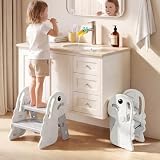
The Ezebaby Foldable Step Stool is advertised as a grey, adjustable stool that can be configured as either a two-step or single-step unit. Its listed features include wide non-slip steps, side handrails, a locking mechanism, a foldable design, and an included faucet attachment.
These features may make it a practical household accessory for families with young children. However, when choosing a stool for a toddler, convenience should never take priority over stability, correct assembly, and safe supervision.
This guide explains the product's advertised design, its possible everyday uses, and the important details parents and caregivers should check before purchasing.
1. What Is the Ezebaby Foldable Step Stool?
The Ezebaby step stool is designed to help children reach certain household areas that would otherwise be too high for them. Rather than using a conventional adult step stool, a child-sized design may offer steps and handholds positioned for smaller users.
According to the supplied product description, this model can be adjusted between a two-step and a single-step configuration. It is also designed to fold for storage when it is not needed.
The listing describes the following features:
| Feature | Advertised details |
|---|---|
| Brand | Ezebaby |
| Product type | Children's step stool |
| Colour | Grey |
| Configuration | Adjustable one-step or two-step design |
| Step spacing | Approximately 14 cm between the ground and first step, and another 14 cm between the first and second steps |
| Step surface | Non-slip texture |
| Handholds | Side handrails |
| Storage | Foldable construction |
| Additional accessory | Faucet attachment |
| Cleaning | Smooth plastic surfaces designed to be wiped clean |
These details come from the supplied product description and have not been independently verified. The listing does not provide the stool's overall dimensions, maximum weight capacity, or a specific recommended age range in the information supplied here.
Those missing details are important, particularly if you intend to use the stool with a toddler.
2. Adjustable One-Step and Two-Step Configurations
One of the product's main advertised features is its adjustable design. The seller says the top step can be rotated after pressing a locking mechanism, allowing the stool to change from a two-step arrangement to a single-step version.
This may be useful for households where the stool is used in different locations or where the child needs different amounts of height for particular activities.
Using the two-step configuration
A two-step arrangement may help a child reach a sink or another suitable household area that is higher than the child can comfortably access from the floor.
The listing describes approximately 14 cm of height between the ground and the first step, followed by another 14 cm between the first and second steps.
This information can help parents estimate the intended step spacing, but it does not establish the stool's total height, stability, or suitability for every child.
Using the single-step configuration
A single-step configuration may be more convenient when a smaller elevation is sufficient. It can also reduce the need to use an extra step for certain everyday routines.
However, caregivers should not assume that changing the configuration makes the stool suitable for every task. The selected arrangement must be stable, correctly assembled, and appropriate for the child's reach and abilities.
Why the locking mechanism matters
The seller describes a locking buckle intended to help prevent the top section from moving or folding unintentionally.
Before each use, an adult should check that the stool is in the intended configuration and that the locking mechanism is fully engaged. If the mechanism does not lock securely, feels loose, or appears damaged, discontinue use until the problem has been resolved.
An advertised safety lock is a design feature, not a guarantee that the stool cannot move or tip over.
3. Wide Steps and Non-Slip Surfaces
A child's step stool should offer a suitable surface for placing both feet while climbing or standing. The Ezebaby listing highlights wider steps and a non-slip surface as part of its design.
Why step width matters
A sufficiently wide platform can make it easier for a child to position their feet without standing close to an edge. This may be particularly useful for young children who are still developing balance and coordination.
The product description, however, does not provide exact step dimensions. Parents should inspect the product photographs and any available measurements to decide whether the platform appears suitable for their child's foot size.
What about the non-slip surface?
The listing describes a textured, non-slip step surface intended to improve grip.
Grip can be especially important around sinks, where water may splash onto the floor or stool. Even so, a non-slip texture does not eliminate the risk of slipping.
For safer use:
Place the stool on a flat, firm surface.
Keep the floor and steps dry.
Remove soap, water, and other slippery substances promptly.
Check that the stool does not wobble before allowing a child to climb.
Do not place it on loose rugs or uneven flooring unless the manufacturer explicitly permits that use.
The stool should not be used if the steps are cracked, loose, excessively worn, or otherwise damaged.
4. Side Handrails for Extra Grip
The Ezebaby stool is advertised with side handrails designed to give children something to hold while climbing or stepping down.
For young children, accessible handholds may make it easier to coordinate movement when getting onto a raised platform. They can also provide a familiar point of contact during everyday routines.
Encouraging more confident movement
A child may gradually learn how to approach the stool, place a foot on the first step, hold a handrail, and move carefully to the next level.
An adult can help by demonstrating the process and remaining close enough to intervene if the child loses balance.
The presence of handrails should not be interpreted as permission for a child to climb unattended. A stool is a raised platform, and falls can still occur even when handholds are provided.
What should caregivers check?
Before use, inspect the handrails for looseness, cracks, sharp edges, or other defects. Confirm that the handholds are securely attached and can be reached comfortably by the intended child.
The listing does not provide independent stability testing or detailed safety certification information, so those details should be verified with the seller or manufacturer if they are important to your purchasing decision.
5. Supporting Everyday Bathroom Routines
The bathroom is one of the main intended uses described in the listing. The stool is advertised for activities such as washing hands, brushing teeth, and supporting toilet-training routines.
These tasks can involve a child reaching a sink or standing at an appropriate height while an adult supervises.
Handwashing
A step stool may help a child reach the sink without needing to be lifted each time. The included faucet attachment is also advertised as an accessory intended to make washing hands easier.
Before relying on the attachment, check how it fits your tap and whether it is compatible with your sink's design. The supplied description does not identify the attachment's exact dimensions or compatibility requirements.
Adults should supervise water temperature and help prevent the child from reaching hot water or unsafe bathroom products.
Brushing teeth
A stool may allow a child to stand at a sink and see their reflection while brushing. This can make the routine more accessible, but the stool should be placed securely and used only while an adult is nearby.
Keep toothbrushes, toothpaste, and other bathroom items organized so the child does not need to stretch or lean dangerously to reach them.
Toilet training
A step stool may help with some toilet-training routines, depending on the bathroom layout and the child's needs. However, it should not be treated as a replacement for an appropriately designed toilet-training step, seat, or other support when those are needed.
The caregiver should confirm that the stool fits the available space and does not interfere with the child's ability to get on or off the toilet safely.
6. Can It Be Used in the Kitchen?
The product is also marketed as a kitchen step stool for helping children participate in everyday household activities.
For example, an adult may use it to help a child reach a suitable height for a supervised activity at a sink or another appropriate area.
However, the kitchen introduces additional risks. Hot surfaces, knives, boiling liquids, electrical appliances, and heavy objects can all be within reach when a child stands on a raised platform.
A child should never use a stool to gain access to a stove, oven, sharp utensils, hot cookware, or other hazards. Do not place the stool near a counter edge where the child could pull objects down.
If the goal is to involve a child in cooking, choose activities that can be performed safely under close adult supervision and keep the stool away from heat and hazardous equipment.
7. Foldable Design and Storage
Another advertised feature is the foldable construction. The listing says the stool can be collapsed by operating a latch and bringing the front and rear supports together.
A folding design may be useful in a small home or shared bathroom where floor space is limited.
Potential storage benefits
The stool can be put away when it is not in use.
It may be easier to store beside a cabinet or in a suitable cupboard.
Folding may help keep a bathroom or kitchen floor less cluttered.
The stool can be moved between appropriate household locations when needed.
The actual storage footprint is not stated in the supplied description, so check the product dimensions before assuming it will fit a particular cabinet or storage space.
Folding safety
Moving parts introduce a need for care. Children should not be allowed to fold, unfold, or play with the stool's locking mechanisms unless the manufacturer specifically designs and permits that operation for them.
An adult should handle folding and unfolding, keep fingers away from moving joints, and verify that the stool is fully open and locked before use.
Never allow a child to stand on a partially folded stool.
8. Easy Cleaning and Everyday Maintenance
The seller describes the stool as being made with smooth plastic surfaces that can be wiped with a damp cloth.
This may make routine cleaning straightforward, especially when the stool is used near a sink or toilet where splashes are common.
Simple maintenance practices
Wipe away water, soap, and visible dirt.
Follow the manufacturer's cleaning instructions.
Allow the stool to dry before use if the steps or floor become wet.
Check regularly for cracks, loose parts, or damage around the hinges.
Inspect the locking mechanism after folding and unfolding.
Store the stool in a suitable location where it will not be damaged.
Avoid using cleaning products that could damage the material or leave the step surfaces slippery unless the manufacturer confirms they are suitable.
The listing describes the plastic as durable for everyday use, but it does not provide material specifications or long-term durability test results.
Potential Advantages
Based on the supplied product description, the Ezebaby stool has several features that may be useful in a family home.
Adjustable configuration: The advertised one-step and two-step options may provide flexibility for different household routines.
Non-slip step surfaces: The textured platforms are intended to provide grip when children climb or stand.
Side handrails: These provide handholds that may help children position themselves while using the stool.
Foldable construction: The stool can be collapsed for storage when not required, provided the folding mechanism operates correctly.
Bathroom-oriented design: The advertised uses include handwashing, toothbrushing, and some toilet-training routines.
Faucet attachment: The included accessory may help some children reach the water flow more easily, depending on tap compatibility.
Wipe-clean surfaces: Smooth plastic surfaces may simplify ordinary cleaning.
These are potential advantages based on the listed design features. They do not establish that the stool has passed particular safety tests or is suitable for every child.
Things to Consider Before Buying
Check the Weight Capacity
The supplied description does not state the maximum supported weight. Confirm this specification with the seller or manufacturer before allowing a child to use the stool. Do not assume that it is suitable for adults simply because it is a step stool.
Confirm the Recommended Age Range
No exact age recommendation is included in the supplied information. Children develop balance and coordination at different rates, so suitability should not be judged by age alone.
Verify the Dimensions
The description gives the spacing between the steps but does not provide the complete product dimensions. Check the total height, width, depth, and folded size to ensure that it fits your bathroom or kitchen.
Inspect the Locking Mechanism
Because the stool changes configuration and folds, its locks and hinges are important. Make sure the stool locks securely in the intended arrangement and does not shift under normal use.
Supervision Is Essential
The stool is designed for children, but it is not a substitute for adult supervision. Young children can lean, reach too far, or lose their balance unexpectedly.
The Faucet Attachment May Not Fit Every Tap
The listing does not provide detailed compatibility information for the included attachment. Check your faucet's design and the manufacturer's instructions before use.
Do Not Use It Near Hazards
A stool can give children access to areas they cannot ordinarily reach. Keep it away from hot appliances, sharp objects, windows, unsecured furniture, and other potentially dangerous locations.
Who Might Benefit From This Step Stool?
The Ezebaby stool may be worth considering for families who want a child-sized platform for supervised bathroom routines, handwashing, brushing teeth, and other suitable daily activities.
Its adjustable configuration may appeal to caregivers who want the option of using one or two steps, while its folding design may be useful in smaller homes.
It may be less suitable if the manufacturer cannot confirm the child's weight is within the supported limit, if the stool does not fit the available space, or if its locking mechanism does not operate securely.
For very young children or children who have difficulty maintaining balance, caregivers should be particularly cautious and consider whether another form of assistance is more appropriate.
Frequently Asked Questions
1. Can the Ezebaby stool be used as a one-step or two-step stool?
The supplied listing says it can be adjusted between one-step and two-step configurations using a locking mechanism. Follow the manufacturer's instructions and verify that the selected configuration is securely locked before use.
2. Does it have non-slip steps?
The product description advertises non-slip step surfaces. Keep the steps clean and dry, and check that the stool remains stable on the floor.
3. Is it suitable for toilet training?
The seller lists toilet-training routines among its intended uses. Whether it is suitable depends on the child's size, bathroom layout, stool stability, and the manufacturer's safety guidance.
4. Can I use it in the kitchen?
It is advertised for kitchen use, but it should only be used for suitable supervised activities. Keep children and the stool away from hot appliances, sharp objects, and hazardous items.
5. Is the stool easy to store?
The product is described as foldable, allowing it to collapse for storage. Check the folded dimensions and ensure that an adult can operate the latch safely.
6. Does it include a faucet attachment?
The supplied description says that a faucet attachment is included. Confirm compatibility with your tap and follow the manufacturer's fitting instructions.
7. What is the maximum weight capacity?
The supplied product details do not state the maximum supported weight. Check the current listing or contact the manufacturer before use.
8. Can children fold or unfold it themselves?
The description does not establish that independent folding is safe for children. An adult should handle the mechanism and keep the child's fingers away from hinges and moving parts.
Final Thoughts
The Ezebaby Foldable Step Stool is advertised as an adjustable household helper for children's everyday routines. Its one-step and two-step configurations, non-slip surfaces, side handrails, folding design, and included faucet attachment may offer practical convenience for some families.
Its usefulness will depend on the child's size and abilities, the layout of the home, and whether the stool's dimensions and weight capacity meet the manufacturer's requirements. Because it is a raised platform with moving parts, proper assembly, secure locking, a stable floor, and close adult supervision are essential.
Before purchasing, confirm the weight limit, age guidance, dimensions, and safety documentation. A suitable step stool can make certain routines more accessible, but careful supervision remains the most important part of using it safely.
Affiliate Disclosure: As an Amazon Associate, I earn from qualifying purchases.


Comments
Comments
Post a Comment